Tag

CPSO

CARICOM Heads of Government and Regional Private Sector Agree Concrete Actions on Affordability at Second High-Level Breakfast Dialogue

By news, Press Release, pressrelease, Tariffs, TradeNo Comments

CASTRIES, Saint Lucia — July 9, 2026. The second High-Level Breakfast Dialogue between the OECS Business Council (OBC), the CARICOM Private Sector Organization (CPSO) and CARICOM Heads of Government was convened at Sandals Grande, Saint Lucia, under the theme “Meeting the Affordability Challenge: Toward a Proactive Agenda for Member States and the Private Sector” on July 6th 2026, in the margins of the 51st Regular Meeting of the Conference of Head of Government of the Caribbean Community.

The Dialogue brought together more than one hundred and twenty senior representatives of the CARICOM private sector with Heads of Government from eleven (13) Member States, the Caribbean Congress of Labour (CCL), development finance partners—including the Inter-American Development Bank (IDB), the Caribbean Development Bank (CDB) and the CARICOM Development Fund (CDF)—and other regional institutions.

Against the backdrop of rising cost-of-living pressures across the Community, participants examined practical measures to improve affordability by removing barriers to intra-regional trade, reducing transportation and logistics costs, diversifying imports, mobilising regional investment capital, strengthening tourism linkages, and addressing the disproportionate negative impacts (DNI) of the International Maritime Organization’s Net-Zero Framework (NZF) on CARICOM Small Island Developing States (SIDS).

The discussions reflected a strong consensus that regional governments, the private sector and organised labour must move beyond policy dialogue to coordinated implementation, supported by clearly defined mandates, timelines and measurable outcomes.

Key Outcomes and Takeaways

Regional Travel and Maritime Transport: Dominating the morning’s discussions was the urgent need to resolve the Region’s inadequate transport capacity, which continues to constrain the CSME commitment to the free movement of people and goods. The Session agreed on a September 2026 deadline for creation of the enabling regulatory framework for the mutual recognition of insurance, licences and road taxes, essential to finalising arrangements for the regional ferry service to be operated by the private sector. In the interim, Heads determined that an earlier pilot ferry initiative will be pursued, utilising a vessel the Government of Trinidad and Tobago has expressed its willingness to deploy to launch the service. The Session also registered satisfaction at the commencement of service by Executive Air Cargo, which has begun transporting agri-food products among Member States.

Non-Tariff Barriers: Turning to the barriers within the Region’s own control, the Session adopted a ‘pairwise’ model of direct engagement between the Member States implementing the fifty-seven (57) non-tariff barriers (NTBs) identified by the private sector as suppressing intra-regional trade, and the Member States affected by them. The model will be implemented under the leadership of a Lead Head of Government, with the active participation of the private sector and the relevant ministerial and regulatory institutions, and with implementing and affected States committing to time-bound remedial actions. 

Import diversification: The Breakfast Meeting benefitted from a presentation of technical work on reducing the cost and increasing the benefits, of diversifying and de-risking CARICOM’s imports. It noted that the Region stands to realise expected savings of circa USD 2.0 billion from the diversification of a component of its non-fuel imports alone and recognised the scope for still greater savings from reduced fuel imports as the Region transitions to renewables. The CPSO was urged to undertake further work on the fuel import-energy transition nexus, as a matter of immediate priority.

Short-Term Cost-of-Living Measures: The Session discussed short-term measures to ease the cost-of-living pressures bearing on CARICOM households. Prime Minister Mottley made an explicit call for a formal tripartite compact among Governments, the private sector and organised labour, covering a basket of essential products. She also called on the private sector to accept lower profits on essential goods to ease the cost of living for CARICOM citizens. The need for further discussions with the contribution of ideas from all quarters was recognized.

Mobilising regional savings: The Session then turned from costs to capital, endorsing the urgency of creating a bridge between the surplus liquidity held by regional financial institutions and strategic investment opportunities in areas such as desalination, battery storage, solar, wind and geothermal power generation, and port facilities. Recognising that the people of CARICOM remain largely unaware of these opportunities, the Session endorsed their publication on a common regional platform as a necessary first step. Investment opportunities in agriculture were singled out for listing on the platform, and a request was made for a compendium of CARICOM-wide agricultural investments to be presented at the next High-Level Breakfast Forum.

Tourism linkages: In the same spirit of building regional value chains, the Session renewed its support for completing the Tourism Linkages Project — mandated by the Forty-Eighth Regular Meeting of the Conference of Heads of Government — to strengthen the connections between tourism and regional agriculture, manufacturing and services.

Climate action and the IMO Net-Zero Framework: Closing the substantive agenda, the regional private sector reaffirmed its commitment to climate action, decarbonisation and the reduction of greenhouse gas (GHG) emissions as essential to the sustainable development of CARICOM Member States. At the same time, the Session expressed broad support for a cautious regional approach to implementation of the IMO Net-Zero Framework (which aims to impose penalties on shipping failing to convert fleets to net-zero carbon-emitting fuels), citing its disproportionate negative impacts on Small Island Developing States, consumers and the tourism industry—particularly the cruise sector. Participants also endorsed extending the CPSO’s import-diversification work to quantify the import savings and wider economic benefits associated with the transition to renewable energy, with an update to be presented to the next Meeting of the Council for Finance and Planning (COFAP).

Implementation: To carry the agenda forward, the Session agreed to establish Working Groups operating with predefined timelines and measurable deliverables, ensuring that the commitments arising from the Session are implemented and monitored for accountability. CPSO will work closely with the CSME Prime Ministerial Sub Committee to follow up on this structure.

Shared On-going Commitment: Shared Ongoing Commitment: The Session concluded with a shared determination that the Caribbean’s affordability challenge must be addressed through practical, time-bound and results-oriented action, and that the enduring partnership among governments, the private sector and organised labour will remain central to delivering meaningful benefits for the people of the Community. In closing, CPSO Chairman Gervase Warner thanked the Heads of Government and private sector representatives for their honest engagement and collaborative contributions, observing that the stage has been set for continuing collaboration among the private sector, Heads of Government and organised labour. He committed the CPSO to following up on delivery of the work programme identified during the Session.

— END —

Notes to Editors:

The CARICOM Private Sector Organization (CPSO) is an Associate Institution of the Caribbean Community (CARICOM), representing the regional private sector in advancing the CARICOM Single Market and Economy (CSME).

The OECS Business Council (OBC) is the representative body of the private sector of the Organisation of Eastern Caribbean States.

The First High-Level Breakfast Dialogue was convened in July 2025 in the margins of the 49th Regular Meeting of the Conference of Heads of Government of the Caribbean Community (CARICOM).

CPSO Sets New Standard for Measuring Private Sector Action on NCDs

By news, Press Release, pressreleaseNo Comments

Launch of Reporting Framework to Track and Scale Business-led Health Initiatives

Bridgetown, Barbados – The CARICOM Private Sector Organization (CPSO) has launched the Region’s first Reporting Framework for Private Sector NCD Reduction Initiatives, marking a major step forward in coordinating and scaling business-led responses to Non-Communicable Diseases (NCDs) across CARICOM.

Unveiled during a virtual session on March 24, the Framework provides a structured system to document, measure, and amplify private sector contributions to reducing NCDs—one of the Caribbean’s most pressing public health challenges.

NCDs account for approximately 78 percent of all deaths in the Caribbean, placing sustained pressure on health systems, economic performance, and workforce productivity. Until now, there has been no unified mechanism to capture and assess the private sector’s role in addressing this crisis. The Reporting Framework changes that.

For too long, the private sector has been viewed as a bystander in the NCD crisis,” said Dr. Patrick Antoine, CEO and Technical Director of the CPSO. “We are making it clear that we are active partners in this fight. This Framework is yet another down payment to ensure that this unfortunate perception ends today. The Framework is a decisive step toward demonstrating our commitment and ensuring that our contributions are visible, measurable, and impactful.

Across CARICOM, businesses have already been investing in employee wellness programmes, product reformulation, expanded health benefits, mental health initiatives, and community-based education and outreach. However, much of this work has remained fragmented and underreported.

The Reporting Framework addresses this gap by enabling organizations—regardless of size or sector—to systematically track their initiatives, measure outcomes, and share best practices across Member States. It also creates opportunities to scale successful interventions at the regional level.

What gets measured gets managed, and what gets reported gets recognised,” Dr. Antoine added. “For the first time, companies across the Region will have a standardized approach to documenting and strengthening their contributions to NCD reduction.

CPSO Chairman Gervase Warner underscored the critical role of the private sector in advancing public health outcomes.

Businesses have a direct responsibility to the health and wellbeing of their employees and customers,” he said. “By taking the lead and demonstrating our efforts, we position ourselves as essential partners in tackling this challenge across the Region.

Chairman Warner noted that shifting consumer preferences toward healthier products and lifestyles present both a public health opportunity and a strategic business advantage, particularly as companies adapt to evolving regional and global markets.

The Framework was developed under the leadership of Dr. Alison Gajadhar-Foster, Technical Consultant, with guidance from the CPSO Private Sector Working Group on NCDs.

CPSO is encouraging widespread adoption of the Framework and has reaffirmed its commitment to working closely with the CARICOM Secretariat, regional institutions, and civil society partners to strengthen health outcomes and build a more resilient Caribbean Civilization.

Please click the following to access the CARICOM Private Sector Reporting Framework: https://survey.kma.consulting/zs/NaM3ws.

Should you require any additional support, please contact us at info@thecpso.org.


-END-

CPSO Applauds Belize and Guyana Sugar Refinery Projects as Strategic Investments to Reduce CARICOM Food Import Bill

By Belize, Guyana, news, Press Release, pressreleaseNo Comments

Bridgetown, Barbados — The CARICOM Private Sector Organization (CPSO) expresses support for the sugar refinery investments being made in Belize and Guyana by joint ventures involving Sucro Limited, Santander Sugar Limited, and GAICO Construction & General Services Inc, which will expand the regional supply of refined sugar within the CARICOM Single Market and Economy (CSME).

CARICOM currently sources a significant amount of refined sugar from extra-regional sources. According to CPSO estimates, in 2024, the Region imported just over USD150 million in refined sugar. The Belize and Guyana sugar refinery investments will therefore add regional refining capacity and reduce the Region’s dependence on external sources by allowing more of the Region’s raw sugar to be processed within the Community.

The Belize project, under Caribbean Sugar Refinery Limited, will be located within the Santander complex in the Valley of Peace and is expected to commence operations before June 2026. In Guyana, Demerara Sugar Refinery Inc., located at the former Wales Estate, will utilize proven refinery assets and technology being relocated from Canada, alongside raw sugar produced by Guyana Sugar Corporation (GuySuCo), to support a quick commencement of operations.

The CPSO commended His Excellency Dr. Mohamed Irfaan Ali, President of the Cooperative Republic of Guyana, and the Honourable John Briceño, Prime Minister of Belize, for their leadership and commitment in championing the refinery investment and for their support for the CARICOM sugar industry. Noting that this policy commitment was publicly reaffirmed before the Belize National Assembly on February 2, 2026, the CPSO emphasized that the clear policy signal transmitted from the highest political level would further bolster private sector confidence to increase investments in the agri-food sector and position CARICOM as a stable and secure market for regionally produced goods.

Dr. Patrick Antoine, Chief Executive Officer and Technical Director of the CPSO, described the refinery investments as strategic for the rebuilding of CARICOM’s sugarcane production capacity. He noted that the projects are closely aligned with both the region’s agri-food policy and strategy, under the 25 by 2025 plus 5 (2030) agenda, and the Community’s Industrial Policy.

Dr. Antoine further noted that the immediate priority must be to meet intra-regional demand with regionally processed output. By securing the CARICOM market first, the CSME will provide the opportunity for the refineries, supported by expanding sugar production, to achieve the scale and competitiveness required for long-term sustainability.

He added that strong regional policy coordination will be essential to support investments of this scale, making the point that “Private capital can only transform regional agriculture into agroindustry, where market certainty and policy coherence exist across CARICOM. For these investments to achieve their full regional impact, they must be supported by coordinated trade, agriculture, and industrial policies.”

The refinery projects, together with expanded sugar cane production, represent a critical shift for the Caribbean sugar and sweetener value chain. The expansion of regional refining capacity is fully aligned with the Community’s objective of reducing the extra-regional food import bill and deepening regional value chains under the 25 by 2025 plus 5 (2030) agenda.


CPSO Welcomes The Commencement of Full Free Movement Among Four CSME Member States

By Press Release, pressreleaseNo Comments

Bridgetown, Barbados – The CARICOM Private Sector Organization (CPSO) welcomes the implementation of full free movement rights for nationals of Barbados, Belize, Dominica and Saint Vincent and the Grenadines under the CARICOM Single Market and Economy (CSME). Full free movement for these nationals comes into effect today, October 1st, 2025.

The implementation of full free movement represents a defining milestone in the realization of the CSME and brings tangible meaning to the vision of a borderless regional economy. Full free movement for all nationals of these countries will contribute to cross border enterprise and will facilitate the ease of doing business for the private sector, thereby strengthening intra-regional economic activity, competitiveness, and economic growth.

For the private sector, it signals a deeper commitment to a unified economic space where goods, services, capital and skilled labour move freely, enabling firms to scale, invest, and innovate more effectively across the Caribbean Community (CARICOM).

Commenting on the official start of the regime, Dr. Patrick Antoine, CEO and Technical Director of the CPSO, stated:

“The regional private sector has long advocated for the removal of barriers to the free movement of people within our Region. This move by Barbados, Belize, Dominica, and St. Vincent and the Grenadines demonstrates the kind of action-oriented leadership needed to make regional integration a lived reality for businesses, workers, and families.”.

Dr. Antoine further noted that as the first CSME Member States to implement full free movement, these four countries now have the opportunity to demonstrate how labour mobility can strengthen economic opportunity, deepen social cohesion and build long-term resilience.

The CPSO pledges to work closely with Governments, the CARICOM Secretariat and other stakeholders to support remaining the CARICOM Member States in their journey toward full free movement, fulfilling the vision of the Framers of the Revised Treaty of Chaguaramas, and the aspirations of our people for a united, borderless Caribbean Community.

CPSO congratulates Caribbean Chemicals on the success of its proposal in the IDB Sargassum Innovation Quest

By Press ReleaseNo Comments

The CARICOM Private Sector Organization (CPSO) congratulates Caribbean Chemicals and Agencies Ltd, (CC), a leading regional supplier and producer of agricultural inputs, on the success of its proposal in the Sargassum Innovation Quest: Building Resilient Coastal Ecosystems, an initiative of the Inter-American Development Bank (IDB) and its innovation arm, IDB Lab, in collaboration with the United States Agency for International Development (USAID).

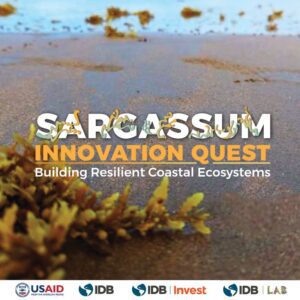
Sargassum Innovation Quest

Image courtesy Ms Carina Cockburn, IDB Country Representative, Barbados.

The submission by CC was the culmination of its active collaboration with Plant & Food Research, Caribbean Regional Fisheries Mechanism (CRFM) and the CARICOM Private Sector Organization (CPSO) with the Concept Note and the Pitch Deck prepared by Business Systems Expert, Mr. Dale Chesney. 

The collaboration included successful preparation, from Sargassum, of a bio stimulant liquid that did not increase plant or soil levels of arsenic and other heavy metals, the design of a pilot plant to manufacture same and its testing for use as a bio stimulant under experimental and farmer conditions for a wider range of crops and conditions.

The Sargassum Innovation Quest was launched in 2024 to identify and support solutions that leverage advanced technologies and innovative practices to harness the potential of Sargassum biomass and enhance the resilience of coastal communities in Latin America and the Caribbean.

The CC submission was one of 72 from 13 countries across the Region. It was also one of five initiatives which were announced on January 14th, 2025 by IDB and IDB Lab as being preselected. The five initiatives all aim to harness the potential of Sargassum as a resource for various industries. The other named beneficiaries are Waste Recycling Environment Network (Belize), C-combinator (Mexico), SOS Carbon (Dominican Republic) and Origin by Ocean (Dominican Republic).

As a part of the next steps in the process, CC is scheduled to undergo a due diligence process. Upon successful completion, they will proceed to design their projects and become candidates to receive funding from IDB Lab and USAID to develop their innovative models. All organisations will also join the IDB’s global innovators network to address the sargassum management needs and the conservation of coastal-marine ecosystems across Latin America and the Caribbean.

CEO and Technical Director of the CPSO, Dr. Patrick Antoine, in extending congratulations to CC, noted that its success in the Sargassum Innovation Quest is a clear demonstration of the Region’s ability to leverage cutting-edge solutions to turn environmental challenges into sustainable opportunities. He also underscored the CPSO’s commitment to fostering impactful collaborations between public and private sector stakeholders that drive innovation to address critical agricultural and environmental challenges for CARICOM Member States.

Mr. Joe Pires Jnr, Chairman and CEO of CC has recognised the role of CPSO in effectively bringing the private sector and the development agencies (CRFM, Plant & Food Research, with support from CARDI and UWI) together in partnership that will substantially contribute to the success of the CARICOM Heads of Government Mandate of 25×2025 – food import reduction Initiative.